The Middle East is experiencing a massive economic renaissance led by the Kingdom of Saudi Arabia’s transformative Saudi Vision 2030. As giga-projects like NEOM, Qiddiya, and Red Sea Global move from blueprints to reality, global enterprises, logistics providers, and regional startups are competing to establish a strategic footprint in the Arabian Peninsula. However, choosing where to incorporate, store inventory, process goods, and establish regional headquarters requires a sophisticated understanding of trade corridors, tax incentives, and customs frameworks. For business leaders seeking to capture market share in Saudi Arabia—the Middle East’s largest economy with over 36 million consumers—evaluating the best free zones near Saudi Arabia is a foundational step.
Whether establishing an entity directly inside Saudi Arabia’s newly launched Special Economic Zones (SEZs) or leveraging neighboring GCC free zones with direct highway, maritime, and air connectivity to Saudi borders, selecting the right jurisdiction determines your operational costs, customs duties, and market speed.
In this ultimate guide, we examine the best free zones near Saudi Arabia, compare their strategic advantages, analyze customs and taxation rules, and provide a roadmap for seamlessly scaling your business in the region.

Why Proximity to Saudi Arabia Drives Regional Business Growth
Saudi Arabia represents the economic powerhouse of the Gulf Cooperation Council (GCC), accounting for nearly half of the region’s GDP and consumer demand. Operating in or near the Kingdom offers unmatched commercial advantages:
-
Unrivaled Market Scale: Saudi Arabia boasts massive infrastructure investments, expanding industrial hubs, and rapidly growing consumer purchasing power.
-
Strategic Geographic Positioning: Located at the crossroad of three continents (Asia, Europe, and Africa), the Arabian Peninsula controls key maritime choke points like the Red Sea and the Arabian Gulf.
-
Cross-Border Customs Integration: Through the GCC Customs Union and regional bilateral treaties, businesses established near Saudi borders benefit from streamlined highway freight logistics and duty-deferred warehousing.
-
Targeted Industry Incentives: Government bodies like the Economic Cities and Special Zones Authority (ECZA) in Saudi Arabia and regional investment boards offer 0% corporate tax rates, custom duty exemptions, and 100% foreign ownership.
Top Special Economic Zones (SEZs) Inside Saudi Arabia
Under the stewardship of the Ministry of Investment (MISA) and ECZA, Saudi Arabia launched a network of specialized Special Economic Zones designed to attract foreign direct investment (FDI). For businesses wanting direct, duty-free presence within Saudi borders, these KSA SEZs represent the premier choice among the best free zones near Saudi Arabia.
1. King Abdullah Economic City (KAEC) SEZ
Located along the Red Sea coast near Jeddah, KAEC SEZ is a world-class maritime and manufacturing hub. Connected directly to King Abdullah Port—one of the fastest-growing container ports globally—KAEC is ideal for light manufacturing, third-party logistics (3PL), automotive assembly, and FMCG packaging.
-
Key Advantages: 5% corporate income tax for up to 20 years, 0% withholding tax on profit repatriation, zero custom duty deferrals on imported machinery and raw materials, and direct connection to the Haramain High-Speed Railway.
2. Integrated Logistics Special Zone (ILSZ / Special Integrated Logistics Zone)
Situated adjacent to King Khalid International Airport in Riyadh, the ILSZ is Saudi Arabia’s flagship duty-deferred logistics zone. It is tailor-made for multinational e-commerce, pharmaceutical distribution, technology repair hubs, and high-value cargo handling.
-
Key Advantages: 50-year tax holiday (0% corporate tax, 0% VAT on inventory transfers), 100% foreign ownership, zero customs duties on inventory stored within the zone, and direct runway-to-warehouse access.
3. Jazan Special Economic Zone
Positioned in southwestern Saudi Arabia near the Bab al-Mandab strait, Jazan SEZ focuses on heavy industry, food processing, mineral processing, and regional trade with East Africa.
-
Key Advantages: Competitive energy and land tariffs, specialized seaport infrastructure, and aggressive tax credits for industrial processing.
4. Ras Al-Khair Special Economic Zone
Located in the Eastern Province along the Arabian Gulf, Ras Al-Khair SEZ is the Kingdom’s premier hub for maritime industries, rig manufacturing, ship repair, and offshore engineering supporting Saudi Aramco’s supply chain.
-
Key Advantages: Proximity to Jubail Industrial City, direct access to maritime dry docks, and tailored tax incentives for heavy maritime manufacturing.
Best Free Zones Near Saudi Arabia in Neighboring Countries
Many multinational corporations and regional traders choose a dual-hub approach: operating a primary manufacturing or holding hub in a neighboring GCC free zone while establishing commercial distribution branches in Saudi Arabia. Below are the best free zones near Saudi Arabia situated in adjacent GCC territories:
1. Bahrain Free Zones (Bahrain Logistics Zone & BIIP)
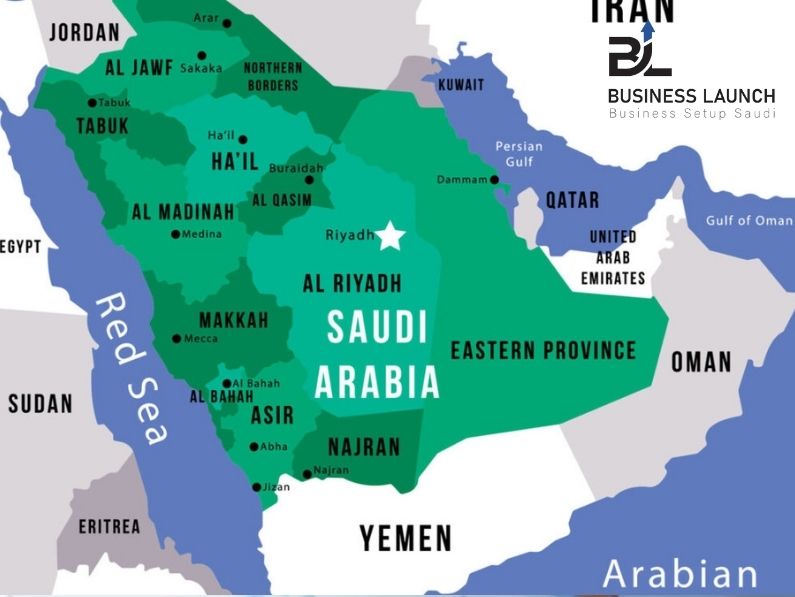
Bahrain offers the closest geographic proximity to Saudi Arabia’s Eastern Province (Dammam, Khobar, Dhahran, and Jubail). Connected by the 25-kilometer King Fahd Causeway, goods can travel from Bahraini free zones to Saudi industrial cities in under two hours.
-
Featured Zones: Bahrain Logistics Zone (BLZ) and Bahrain International Investment Park (BIIP).
-
Why It Ranks High: Promoted actively by the Bahrain Economic Development Board (EDB), these zones offer 100% foreign ownership, 0% corporate tax, lower land lease rates, and fast-track truck clearance across the Saudi causeway.
2. Dubai & UAE Free Zones (JAFZA, DAFZA, & KIZAD)
The United Arab Emirates houses some of the world’s most advanced logistics infrastructure. For regional trading houses supplying Saudi Arabia via land transport or sea freight, UAE free zones are among the best free zones near Saudi Arabia.
-
Jebel Ali Free Zone (JAFZA): Operated by DP World, JAFZA is directly linked to Jebel Ali Port. It connects seamlessly to the UAE-Saudi highway (via the Ghuwaifat/Batha border crossing), making it the primary transshipment hub for goods heading into KSA.
-
Khalifa Industrial Zone Abu Dhabi (KIZAD): Positioned closer to the Saudi border, KIZAD offers ultra-modern industrial land, low energy costs, and direct connections to Khalifa Port.
3. Oman Free Zones (Sohar Port and Freezone & Salalah Free Zone)
Oman has emerged as a crucial strategic gateway for businesses trading with Saudi Arabia. With the opening of the direct 725-kilometer Rub al-Khali (Empty Quarter) highway connecting Oman directly to KSA, transit times between Omani ports and Saudi inland markets have dropped dramatically.
-
Sohar Port and Freezone: Located outside the Strait of Hormuz, Sohar Port and Freezone provides secure ocean freight access paired with direct highway routes into eastern and central Saudi Arabia.
-
Why It Ranks High: Excellent deep-water port facilities, abundant land availability, 100% foreign ownership, and zero personal or corporate income tax.

See Also
- Business Launch Company Expands to KAFD: Your Gateway to Saudi Arabia’s Economic Frontier
- Increasing Company Capital in Saudi Arabia: The Ultimate Legal & Strategic Guide
- How to Amend a Commercial Registration (CR) in Saudi Arabia: The Ultimate 2026 Guide
- Company Stamp Requirements in Saudi Arabia: The Ultimate 2026 Compliance Guide
- Customs Clearance Requirements for Businesses: The Definitive 2026 Compliance Guide
Comparative Matrix: Evaluating the Best Free Zones Near Saudi Arabia
Key Customs & Tax Considerations: GCC Free Zones vs. KSA Mainland
When choosing among the best free zones near Saudi Arabia, corporate decision-makers must consider the critical legal distinction between storing goods in a free zone versus clearing goods into the Saudi mainland:
1. The “GCC Rules of Origin” Requirement
Under GCC customs agreements, goods manufactured inside GCC free zones do not automatically qualify for zero-duty cross-border trade into Saudi mainland markets unless they meet strict local value-addition thresholds (typically requiring 40% local content and at least 50% GCC national ownership of the manufacturing entity). If goods are simply re-packaged or stored in an external free zone, standard Saudi customs tariffs apply upon crossing the KSA border.
2. Saudi Arabia’s Regional Headquarters (RHQ) Mandate
Under current KSA regulations, foreign multinational companies looking to secure major government contracts, state-owned enterprise tenders, or PIF giga-project procurement must establish their Regional Headquarters (RHQ) inside Saudi Arabia (specifically in Riyadh). While external free zones serve well as regional warehousing hubs, operating your regional executive control center from Riyadh is essential for public sector business.
How to Select the Ideal Free Zone for Your Business Model
To determine which of the best free zones near Saudi Arabia aligns with your strategic goals, follow this decision framework:
Strategic Growth Partner: Business Launch Company
Navigating entity incorporation, selecting between the best free zones near Saudi Arabia, obtaining MISA foreign investment licenses, and maintaining 100% regulatory compliance requires expert local guidance and deep administrative agility.
Business Launch Company is Saudi Arabia’s premier corporate setup, legal advisory, and business expansion consultancy. We simplify company setup and growth in Saudi Arabia. From licensing to compliance, we support entrepreneurs, investors, and international brands scaling under Vision 2030.
Our Comprehensive Suite of Services
-
Company Setup & Free Zone Incorporation: Structuring 100% foreign-owned LLCs, branches, Regional Headquarters (RHQ), and Special Economic Zone entities inside KSA and across the GCC.
-
Licensing & Government Approvals: Expedited processing of MISA licenses, Ministry of Commerce Commercial Registrations (CR), and activity-specific municipal permits.
-
Government Relations (GRO Services): Full management of Qiwa, Muqeem, GOSI, and Saudi Business Center digital portals.
-
Corporate Support & HR Services: Work visa issuance, executive relocation, Saudization (Nitaqat) compliance, and Wage Protection System (WPS) management.
-
Finance & Legal Advisory: SOCPA audit coordination, ZATCA tax filings, e-invoicing integration, and legal translation of Articles of Association.
Contact Information & Head Office Location
Partner with Business Launch Company today to execute your regional expansion strategy with complete legal confidence.
-
-
Google Maps Location: Navigate directly via Google Maps
-
LinkedIn Announcement: View the official LinkedIn expansion post
-
Official Website: https://sasetup.com
📞 Direct Phone / WhatsApp: +966 53 783 3585

✉️ Support Email:          [email protected]
-
Frequently Asked Questions (FAQs)
1. Which free zone is geographically closest to Saudi Arabia?
The Bahrain Logistics Zone (BLZ) and Bahrain International Investment Park (BIIP) are the closest external free zones to Saudi Arabia, located just 25 kilometers from the Eastern Province via the King Fahd Causeway. Inside KSA, the ILSZ in Riyadh and KAEC SEZ near Jeddah offer direct domestic access.
2. Can a company in a UAE or Bahrain free zone trade directly with Saudi customers?
Yes, but goods cleared from an external free zone into Saudi mainland markets are subject to standard Saudi customs duties and VAT unless they satisfy specific GCC Rules of Origin criteria. Additionally, issuing local tax invoices inside KSA generally requires an active KSA commercial registration.
3. What is the difference between a Saudi SEZ and an external GCC Free Zone?
Saudi SEZs (managed by ECZA) are physically located inside Saudi Arabia, allowing businesses to benefit from 0% or low tax incentives while remaining directly inside the KSA customs zone. External GCC free zones are outside KSA borders and require cross-border customs clearance when shipping physical goods into Saudi Arabia.
4. Do I need a Saudi entity if I already have a free zone company in Dubai or Bahrain?
If you plan to bid on government tenders, open local corporate bank accounts in KSA, hire Saudi national staff, or operate a physical retail/distribution footprint in the Kingdom, establishing a licensed entity or branch in Saudi Arabia is legally required.