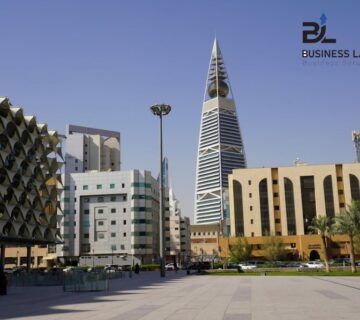

The global economic narrative is currently being rewritten in the sands of the Arabian Peninsula. For decades, the Kingdom was viewed through a singular lens of oil production. Today, however, it stands as one of the most exciting, high-growth investment frontiers on the planet. Driven by the ambitious Vision 2030 roadmap, the Kingdom is aggressively diversifying its economy, opening doors to international innovation, and streamlining its bureaucracy.
If you are wondering how to open business in Saudi Arabia, you are not just looking at a market expansion; you are looking at participating in a multi-trillion-dollar economic transformation. This comprehensive guide will walk you through the legal, financial, and operational steps required to launch a successful venture in the heart of the Middle East.

Why the Global Eyes are on Riyadh?
Before we dive into the logistics of how to open business in Saudi Arabia, it is essential to understand the scale of the opportunity. The Kingdom is the largest economy in the Arab world and a proud member of the G20.
-
Economic Scale: A GDP exceeding $1 trillion.
-
Strategic Location: Positioned at the crossroads of Europe, Asia, and Africa.
-
Giga-Projects: Trillions are being poured into developments like NEOM, the Red Sea Project, and the Diriyah Gate.
-
Ease of Doing Business: The Saudi government has slashed the time required for business registration from weeks to just a few days through digital portals like Invest Saudi.
Step 1: Choosing Your Legal Vehicle
The first decision in how to open business in Saudi Arabia is selecting the right legal structure. This choice dictates your tax liability, ownership rights, and the scope of your operations.
1. Limited Liability Company (LLC)
The most popular choice for foreign investors. It offers a strong legal shield and allows for 100% foreign ownership in most commercial and industrial sectors.
-
Best for: Small to medium enterprises and long-term commercial trade.
2. Branch of a Foreign Company
If you already have a successful global entity, you can open a branch. This is technically an extension of your parent company.
-
Benefit: No separate Articles of Association are needed.
-
Drawback: The parent company retains full legal liability for the branch.
3. Regional Headquarters (RHQ)
As of 2024, the government has introduced the RHQ program. To bid on government contracts, multinational firms must establish their Regional Headquarters in Riyadh.
-
Perks: 30-year 0% corporate tax holiday and exemptions from certain Saudization requirements.
Step 2: Securing the MISA Investment License
For non-Saudi investors, the journey of how to open business in Saudi Arabia officially begins at the Ministry of Investment (MISA). This is the vetting stage where the government reviews your business plan and financial health.
To obtain your MISA License, you will need:
-
Attested Documents: Your parent company’s Commercial Registration and Articles of Association must be legalized at the Saudi Embassy in your home country.
-
Board Resolution: A formal document stating your intent to invest in KSA.
-
Financial Statements: Usually the last audited year to prove financial stability.
Step 3: Commercial Registration (CR)
Once MISA grants your investment license, you move to the Ministry of Commerce. Here, you will issue your Commercial Registration (CR).
-
Trade Name: You must reserve a unique name that complies with Saudi naming conventions.
-
CR Issuance: This is done via the digital “Meraas” system, which integrates multiple government steps into one.
Step 4: Articles of Association and Notarization
For an LLC, you must draft the Articles of Association (AoA). This document outlines how the company is governed, profit-sharing ratios, and the powers of the General Manager. Under the new Saudi Companies Law, this can often be done digitally, but it requires final notarization to be legally binding.
Your Expert Partner: Business Launch Company (SA Setup)
Navigating the intricacies of how to open business in Saudi Arabia—from MISA licenses to labor law compliance—requires a partner who understands the local terrain. Business Launch Company, strategically located in the King Abdullah Financial District (KAFD) in Riyadh, is the premier choice for international brands and entrepreneurs.
They offer a total “Turnkey” solution, facilitating a smooth transition into the Saudi market. Their services include:
-
End-to-End Registration: Managing MISA licenses and Commercial Registrations.
-
Government Relations (GRO): Handling the complexities of labor visas and the Nitaqat system.
-
Corporate & Administrative Support: Providing high-end Virtual Office solutions and legal secretarial services.
-
Financial Mastery: Professional management of Zakat, VAT, and Bookkeeping to ensure 100% compliance with ZATCA regulations.
Accelerate Your Launch: Contact Business Launch Company at +966 53 783 3585 or email [email protected] to turn your Saudi vision into a operational reality.

See Also
- Navigating Success: The Ultimate Guide to Obtaining a Saudi Arabia Business License
- The Definitive Guide to Establishing and Managing a Foreign Company Saudi Arabia
- Starting a Business in Saudi Arabia: A Complete Guide for Investors
- How to Launch Your Business in Saudi Arabia from Abroad
Step 5: Post-Incorporation Compliance
Securing your CR is just the beginning. To be truly “open for business,” you must complete several follow-up registrations:
-
Chamber of Commerce: Essential for document authentication.
-
National Address: You must have a verified physical or virtual office address.
-
ZATCA Registration: For Corporate Income Tax and Value Added Tax (VAT).
-
GOSI Registration: The General Organization for Social Insurance for employee benefits.
-
Qiwa & Muqeem: Digital portals for managing labor contracts and expat visas.
Understanding “Saudization” (Nitaqat)
A vital part of how to open business in Saudi Arabia is planning for your workforce. The Nitaqat system incentivizes the hiring of Saudi nationals.
-
Platinum/Green Zones: Companies with high Saudi employment get priority for visa processing.
-
Red Zone: Low-compliance companies face restrictions on hiring expats.
Many companies utilize the HRDF (Human Resources Development Fund) which provides subsidies to help cover the salaries of Saudi employees during their first two years.
Sector Spotlight: Where to Invest in 2026?
When researching how to open business in Saudi Arabia, alignment with Vision 2030 sectors can grant you access to specific incentives and grants.
| Sector | Why it’s Booming | Regulator |
| Tourism | Goal of 100M annual visitors. | Ministry of Tourism |
| Fintech | Rapid shift toward a cashless society. | SAMA |
| Renewable Energy | Focus on Green Hydrogen and Solar. | Ministry of Energy |
| Logistics | Development of global logistics hubs. | Ministry of Transport |
Financial Considerations: Taxes and Costs
While Saudi Arabia is known for being a “tax-friendly” environment, it is not a zero-tax haven.
-
Corporate Tax: Generally 20% on net profit for foreign entities.
-
VAT: Currently 15%.
-
Zakat: Only applies to Saudi/GCC shareholders at 2.5%.
-
Withholding Tax: Applied to payments made to non-residents (e.g., royalties or management fees), ranging from 5% to 20%.
Common Challenges and Expert Tips
-
The Banking Hurdle: Opening a corporate bank account can be rigorous. Tip: Ensure your “Ultimate Beneficial Owners” (UBOs) are fully documented and have all IDs ready.
-
Language Barriers: While Riyadh is an international city, all government portals are in Arabic. Tip: Partner with a GRO service like Business Launch Company to handle translations and interactions.
-
Physical Presence: You cannot finalize your business setup without a verified office lease (Ejar). Tip: Look into “Business Centers” or “Virtual Offices” if you are not ready for a full-scale warehouse or tower.
Summary Checklist: How to Open Business in Saudi Arabia
-
[ ] Legalize parent company documents (Embassy/MOFA).
-
[ ] Apply for MISA Investment License.
-
[ ] Reserve Trade Name and issue Commercial Registration.
-
[ ] Notarize Articles of Association.
-
[ ] Register with Chamber of Commerce.
-
[ ] Open Corporate Bank Account.
-
[ ] Register for ZATCA (VAT/Tax).
-
[ ] Activate Labor Portals (Qiwa/Muqeem).
Conclusion
The decision of how to open business in Saudi Arabia is a play for the future. The Kingdom is not just looking for “investors”; it is looking for partners to build a new world. From the futuristic skylines of Riyadh to the coastal beauty of the Red Sea, the opportunities for growth, scale, and innovation are unprecedented.
By following this roadmap, staying compliant with local regulations, and leveraging the expertise of local consultants, you can position your business at the forefront of the world’s most ambitious economic experiment. The time to enter the Saudi market isn’t next year—it is now.
Frequently Asked Questions
-
Can a foreigner own 100% of a company? Yes, in almost all service, industrial, and trading sectors.
-
What is the minimum capital? It varies. Many service LLCs require “sufficient capital,” while trading licenses often require a minimum of SAR 30 million for 100% ownership.
-
Is it easy to get visas? Yes, provided your company meets its Saudization (Nitaqat) targets.
-
Do I need a Saudi partner? For the vast majority of sectors, a local partner is no longer required.