
Navigating tax regulations in the Kingdom of Saudi Arabia (KSA) is a critical step for both local enterprises and international companies expanding into the region. Since the introduction of Value Added Tax (VAT), maintaining full compliance with the tax authority has become a foundational requirement for doing business.
Whether you are a local startup surpassing sales thresholds or a non-resident corporation executing commercial contracts, understanding VAT Registration in Saudi Arabia ensures smooth operations, prevents steep financial penalties, and unlocks input tax recovery.
In this ultimate guide, we explain everything you need to know about VAT Registration, turnover thresholds, document requirements, step-by-step application procedures, e-invoicing compliance, and key tax categories.

1. What is Value Added Tax (VAT) in Saudi Arabia?
Value Added Tax (VAT) is an indirect tax levied on the consumption of goods and services at each stage of the supply chain, from raw material procurement to final consumer sales.
Saudi Arabia introduced VAT on January 1, 2018, initially at a standard rate of 5%. As part of fiscal measures aligned with economic diversification under Saudi Vision 2030, the Kingdom increased the standard VAT rate to 15% on July 1, 2020.
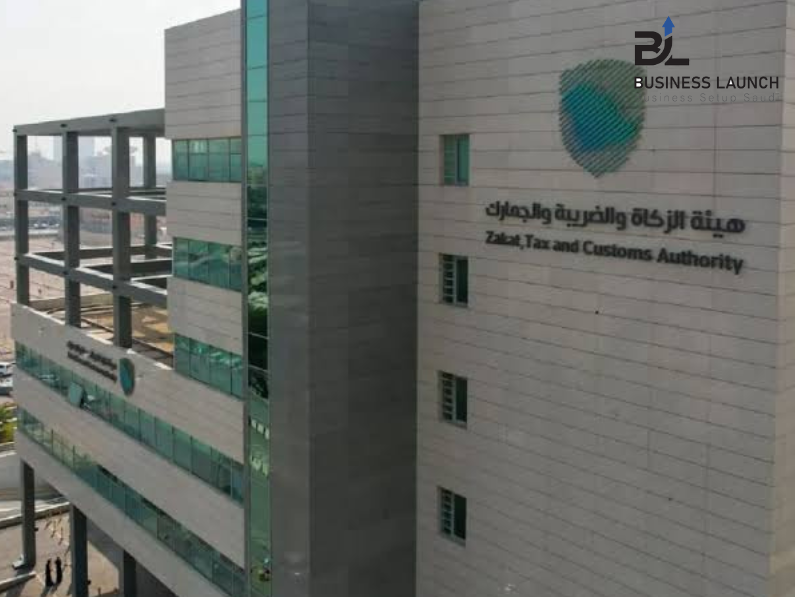
VAT in Saudi Arabia is administered and enforced by the Zakat, Tax and Customs Authority (ZATCA), the governmental body responsible for tax collection, taxpayer audits, e-invoicing regulation (Fatoora), and customs duties.
How the VAT Mechanism Works
-
Output VAT: Tax collected by registered businesses on their sales of goods or services to customers (charged at 15% or 0%).
-
Input VAT: Tax paid by registered businesses on their commercial purchases, operational overheads, and import expenses.
-
Net VAT Payable/Refundable: The difference between Output VAT collected and Input VAT paid. If Output VAT exceeds Input VAT, the business remits the balance to ZATCA. If Input VAT exceeds Output VAT, the business can claim a tax refund or carry forward the credit.
2. Who Needs VAT Registration in Saudi Arabia? Thresholds Explained
Determining your business’s eligibility and legal obligation for VAT Registration depends primarily on your annual taxable turnover and whether your business is resident or non-resident in Saudi Arabia.
       [ Saudi Arabia VAT Registration Thresholds ]

   Annual Turnover (SAR)          Category              Requirement
  -----------------------        ----------            -------------
  > SAR 375,000                  Resident              Mandatory
  SAR 187,500 - 375,000          Resident              Voluntary
  < SAR 187,500                  Resident              Exempt / Optional
  SAR 1+ (Any Amount)            Non-Resident          Mandatory (No Threshold)
A. Mandatory VAT Registration (Resident Businesses)
Any business operating within Saudi Arabia must apply for mandatory VAT Registration if its annual taxable supplies exceed SAR 375,000 (~USD 100,000) during:
-
The preceding 12 months, or
-
The expected upcoming 12 months.
B. Voluntary VAT Registration (Resident Businesses)
Businesses whose annual taxable turnover or annual taxable expenses exceed SAR 187,500 (~USD 50,000), but do not exceed SAR 375,000, can opt for voluntary VAT Registration.
Strategic Tip: Voluntary registration is highly beneficial for early-stage startups and expanding businesses with high initial capital expenditures, as it allows them to reclaim 15% Input VAT paid on office leases, equipment purchases, and professional services.
C. Non-Resident Foreign Businesses (Zero Threshold Rule)
For foreign companies providing goods or taxable services to Saudi-based customers where no local purchaser is obligated to account for VAT under the reverse charge mechanism, there is NO minimum threshold. Foreign businesses must obtain VAT Registration from the very first riyal of taxable transaction made inside the Kingdom.
3. Mandatory vs. Voluntary VAT Registration: A Strategic Comparison
4. Required Documents for VAT Registration
Before starting your online application on the ZATCA portal, prepare the required commercial, corporate, and financial documentation.
For Saudi Resident Entities:
-
Valid Commercial Registration (CR) issued by the Ministry of Commerce.
-
Active corporate portal account details on Qiwa and National Address.
-
Official corporate bank account details (IBAN certificate) in Saudi Arabia.
-
Audited financial statements or verified revenue certificates estimating annual revenue.
-
Details of projected taxable sales and expenses for the next 12 months.
For Non-Resident Foreign Entities:
-
Investment License issued by the Ministry of Investment (MISA).
-
Certificate of Incorporation or commercial license from the home jurisdiction (attested).
-
Appointment of a qualified Saudi-based Tax Representative approved by ZATCA.
-
Proof of contracts or expected taxable supplies to customers located within Saudi Arabia.

See Also
- How to Open a Corporate Bank Account in Saudi Arabia for Foreign Companies
- Commercial Registration (CR) in Saudi Arabia: Complete Guide for Foreign Investors
- The Definitive 2026 Guide: How to Start LLC Saudi Arabia
- Expanding Horizons: The Comprehensive Guide to Establishing a Branch Office Saudi Arabia
- Qiwa Services Saudi Arabia: The Ultimate 2026 Strategic Guide to Labor Compliance
5. Step-by-Step Guide: How to Complete VAT Registration on ZATCA Portal
Follow this structured procedure to complete your online VAT Registration with ZATCA smoothly.
6. Understanding Tax Categories in Saudi Arabia: 15%, 0%, and Exempt
Not all business activities are taxed equally. When issuing tax invoices after completing VAT Registration, you must classify your supplies correctly under one of three tax treatments:
1. Standard Rated Supplies (15%)
Applies to the vast majority of commercial goods, commercial real estate leases, retail items, professional consultations, dining, transportation, and consumer services in KSA.
2. Zero-Rated Supplies (0%)
Supplies subject to 0% tax, meaning no VAT is charged to the end customer, but the business retains the full right to recover Input VAT on related business costs.
-
Direct exports of goods and services outside the GCC territory.
-
Qualifying international transportation services (passenger and freight).
-
Supplies of qualifying investment metals (gold, silver, platinum with purity >= 99%).
-
Qualifying medicine and medical equipment approved by the Saudi Food and Drug Authority (SFDA).
3. Exempt Supplies
Supplies exempt from VAT entirely. Businesses making exempt supplies cannot recover Input VAT incurred on associated expenses.
-
Specific financial services where remuneration is based on explicit margins or implicit interest.
-
Residential property leases and residential real estate rentals.
7. E-Invoicing (Fatoora) Compliance Integration
Following your VAT Registration, businesses in Saudi Arabia must comply with ZATCA’s mandatory E-Invoicing initiative, known as Fatoora.
                   [ ZATCA E-Invoicing Stages ]

   Phase 1: Generation Phase (Dec 2021)
   └── Electronic invoice generation (PDF/XML) via compliant ERP
   └── Prohibition of manual/handwritten invoices

   Phase 2: Integration Phase (Rolling Wave Releases)
   └── Real-time integration with ZATCA platform via API
   └── Cryptographic stamps & UUID implementation
   └── Embedded B2C QR codes & B2B XML clearance
-
Phase 1 (Generation Phase): Requires businesses to generate and store tax invoices electronically through compatible software, strictly prohibiting manual or handwritten invoices.
-
Phase 2 (Integration Phase): Requires direct API integration between the business’s ERP/billing system and ZATCA’s central platform for real-time clearance (B2B invoices) or reporting within 24 hours (B2C invoices).
8. Penalties for Non-Compliance with Saudi VAT Laws
Failing to comply with VAT Registration or tax filing rules in Saudi Arabia carries strict monetary fines enforced by ZATCA:
-
Failure to Register for VAT when obligated: Fixed penalty of SAR 10,000.
-
Late Filing of VAT Returns: Fine ranging from 5% to 25% of the tax value that should have been declared.
-
Late Payment of Due Tax: Fine equal to 5% of the unpaid tax value for each month or part-month for which the tax remains unpaid.
-
Issuing VAT Invoices without Registration: Fine up to SAR 100,000.
-
E-Invoicing Violations: Fines starting from SAR 5,000 up to SAR 50,000 for non-compliance with e-invoicing standards or invoice tampering.

Expand Your Business in Saudi Arabia with Professional Guidance
Setting up a business and managing tax compliance in Saudi Arabia requires specialized local expertise. Whether you need assistance with VAT Registration, ZATCA e-invoicing integration, MISA investment licensing, or corporate entity structuring in Riyadh, working with an established corporate advisor ensures 100% legal compliance and operational freedom.
SA Setup (Business Launch Company)
Your trusted corporate consultant in Saudi Arabia, providing end-to-end commercial solutions, ZATCA tax advisories, and seamless business setup for foreign investors and local enterprises.
-
📞 Call Us Now: +966 53 783 3585
-
✉️ Support Email:[email protected]
-
🏢 Office Address: Building 2.08, King Abdullah Financial District (KAFD), First Floor, Riyadh, Saudi Arabia
-
🌐 Official Website: sasetup.com