
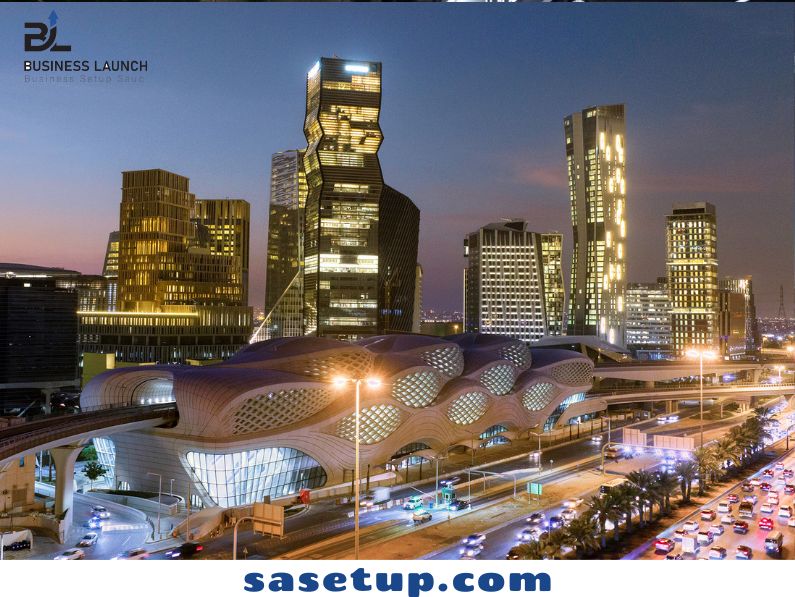
In the competitive landscape of the Middle East, the year 2026 marks a historic peak for the RHQ in Saudi Arabia program. Initially launched as a strategic pillar of Vision 2030, the Regional Headquarters (RHQ) initiative has evolved into a sophisticated ecosystem that has already attracted over 700 multinational corporations (MNCs) to Riyadh.
For global business leaders, establishing an RHQ in Saudi Arabia is no longer just a regulatory requirement for government contracting; it is a calculated move to secure a 30-year tax holiday and gain a foothold in the region’s most aggressive economy. This guide provides the most up-to-date, exhaustive analysis of the setup process, requirements, and unprecedented benefits available in 2026.
What is an RHQ in Saudi Arabia?
An RHQ in Saudi Arabia is a unit of a multinational group, established under Saudi law, to serve as the central hub for the Middle East and North Africa (MENA) region. Its primary purpose is to provide strategic direction, management, and support to the group’s subsidiaries, branches, and affiliates in the region.
The 2026 “Sovereign Shift”
By early 2026, the Saudi government has refined the RHQ rules. While the mandate for government contracting remains the primary “stick,” the “carrot” has been significantly enhanced. The RHQ is now expected to perform at least ten mandatory administrative functions, moving beyond simple paper presence to become a true operational engine.
Unrivaled Benefits: The 2026 Incentive Package
The Saudi government, through the Ministry of Investment (MISA), offers a suite of incentives that are currently unmatched in the GCC.
1. The 30-Year Tax Holiday
The crown jewel of the RHQ in Saudi Arabia program is the tax incentive package:
-
0% Corporate Income Tax: On all eligible income derived from RHQ activities for a renewable period of 30 years.
-
0% Withholding Tax: On dividends, royalties, and payments to related parties tied to RHQ activities.
-
Tax Certainty: In 2026, ZATCA has provided advanced ruling mechanisms to ensure RHQs have total clarity on their tax-exempt status.
2. Labor and Immigration Privileges
-
10-Year Saudization Exemption: RHQs are exempt from mandatory local hiring quotas (Nitaqat) for the first decade of operation.
-
Unlimited Visas: Fast-track processing for executive-level visas with no cap on foreign hiring during the initial setup phase.
-
Spousal Support: Spouses of RHQ employees are granted work permits, and age limits for dependent children have been relaxed.
3. Priority in Government Procurement
While 2026 introduced limited exemptions for specialized technical projects, the general rule remains: Any government contract exceeding SAR 1 million is strictly reserved for companies with a registered RHQ in Saudi Arabia.
Critical Requirements for RHQ Setup in 2026
To qualify for an RHQ license, a multinational must meet stringent criteria designed to ensure “Economic Substance.”
1. Global Presence
The applicant must demonstrate that the group operates in at least two different countries excluding Saudi Arabia and the group’s home country.
2. Operational Minimums
An RHQ is not a shell entity. In 2026, the requirements include:
-
Employee Count: A minimum of 15 full-time employees dedicated to RHQ functions.
-
Executive Leadership: At least three C-suite executives (e.g., CEO, CFO, COO) must be physically based in the Kingdom.
-
Functionality: The RHQ must perform strategic functions such as regional planning, treasury management, and marketing strategy.
3. One-Year Window
Once a MISA RHQ license is granted, the company has one year to hire the required staff and commence mandatory operations. Failure to do so can result in the revocation of the 30-year tax benefits.

See Also
- The Comprehensive Guide to Business Setup in Saudi Arabia: Navigating the Land of Opportunity (2026 Edition)
- Starting a Company in Saudi Arabia: The Ultimate 2026 Guide to Launching Your Business
- The Ultimate Guide to Commercial Registration Saudi Arabia: Unlocking Business Potential in Vision 2030
- The Definitive Guide to Establishing and Managing a Foreign Company Saudi Arabia
The Step-by-Step Setup Process
Step 1: MISA License Application
Applications are submitted through the MISA investor portal. You will need:
-
Audited financial statements of the parent company.
-
A list of regional branches/subsidiaries to be managed by the RHQ.
-
A detailed five-year operational plan.
Step 2: Entity Incorporation
After MISA approval, you must register the entity with the Ministry of Commerce. You can choose to set up the RHQ as a branch or a Limited Liability Company (LLC).
Step 3: Executive Relocation and Hiring
Utilize the Qiwa platform to initiate executive visas. Given the high demand in 2026, many firms are leveraging Riyadh’s “Special Talent” visa categories to bring in specialized tech and finance leaders.
Step 4: Tax Registration (ZATCA)
Even though the tax rate is 0%, you must register with ZATCA for a Tax Identification Number (TIN) and comply with annual reporting to maintain your 0% status.
Strategic Functions of an RHQ
In 2026, the Ministry of Investment categorizes RHQ activities into Mandatory and Optional:
| Mandatory Functions (Choose 10+) | Optional Functions |
| Strategic Planning | Sales and Marketing Support |
| Regional Operations Oversight | Financial Advisory |
| Business Development | HR Management |
| Financial Coordination | Legal Services |
| Corporate Governance | Technical/Engineering Support |
2026 Regulatory Update: Government Contract Exemptions
A notable update in early 2026 is the “Competitive Exemption” mechanism. Foreign companies without an RHQ can now bid for Saudi government projects only if:
-
The project value is below SAR 1 million.
-
The company is the only provider of a critical, highly specialized technology.
-
The government entity receives a special exemption via the Etimad procurement platform.
Warning: These exemptions are rare and temporary. For long-term sustainability, the RHQ in Saudi Arabia remains the only reliable pathway for public sector growth.
Frequently Asked Questions (FAQs)
1. Does the 30-year tax holiday apply to all company profits?
No. The 0% tax applies only to eligible RHQ activities (management and support). If your Saudi branch also conducts “Mainland” commercial activities (like local sales), those profits are taxed at the standard 20% rate. You must maintain separate books.
2. Can the RHQ also be a trading entity?
Yes, but it is often recommended to keep the RHQ as a separate legal entity or a distinct branch to ensure clear separation for tax audit purposes.
3. What happens if we don’t meet the 15-employee requirement?
MISA monitors RHQs annually. If your headcount drops below 15 for an extended period, you risk losing your license and the associated tax and procurement privileges.
4. Is Riyadh the only location for an RHQ?
While Riyadh is the economic heart, an RHQ in Saudi Arabia can technically be located in any city (Jeddah, Dammam, etc.). However, most government ministries are in Riyadh, making it the most practical choice.
5. Can we manage our African subsidiaries from the Saudi RHQ?
Yes. The RHQ is designed for the MENA region, and many firms in 2026 are using their Saudi hub to oversee operations across the African continent due to the Kingdom’s superior logistics and connectivity.
Essential Resources
-
Invest Saudi RHQ Portal: The official gateway for all RHQ applications.
-
ZATCA Tax Rules: Detailed breakdown of the 30-year tax holiday implementation.
-
Etimad Procurement Platform: For tracking government tenders and RHQ-exclusive opportunities.

Conclusion
The RHQ in Saudi Arabia program has transitioned from an ambitious proposal to the cornerstone of Middle Eastern corporate strategy in 2026. With 30 years of tax immunity and absolute priority in the region’s largest project market, the question for global firms is no longer “Should we move?” but rather “How fast can we set up?” By aligning with the 2026 requirements and leveraging the digital infrastructure of KSA, your organization can lead the next wave of regional transformation.



)