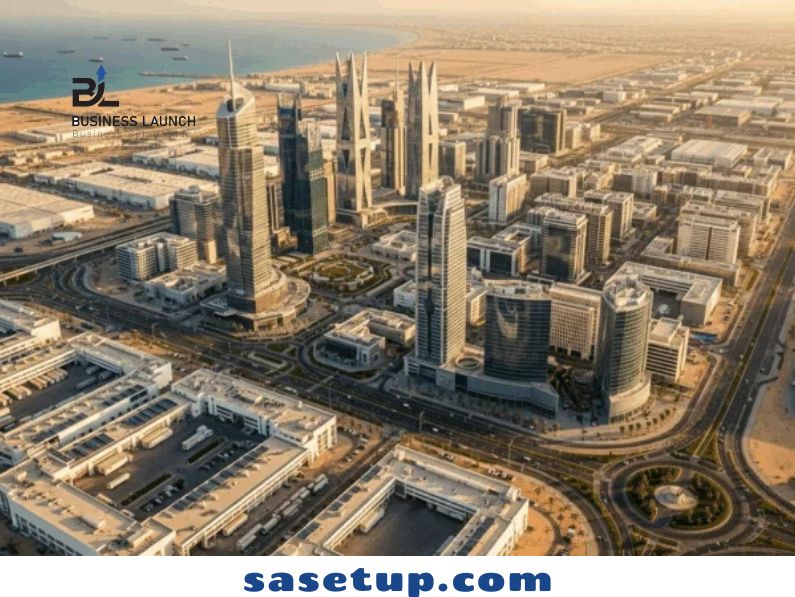
The Kingdom of Saudi Arabia (KSA) has officially entered a new era of industrial and digital sovereignty. As of 2026, the regulatory frameworks for Special Economic Zones in Saudi Arabia have moved from policy planning to full operational execution. These zones, governed by the Economic Cities and Special Zones Authority (ECZA), are designed to be the “engines of growth” under Vision 2030, offering international investors a competitive environment that rivals—and in some aspects, surpasses—global hubs like Singapore or Dubai.
For any global enterprise or ambitious startup, understanding the mechanics of Special Economic Zones in Saudi Arabia is no longer optional; it is a prerequisite for capturing the Middle East’s most lucrative market opportunities.
The Landscape of Special Economic Zones in Saudi Arabia (2026)
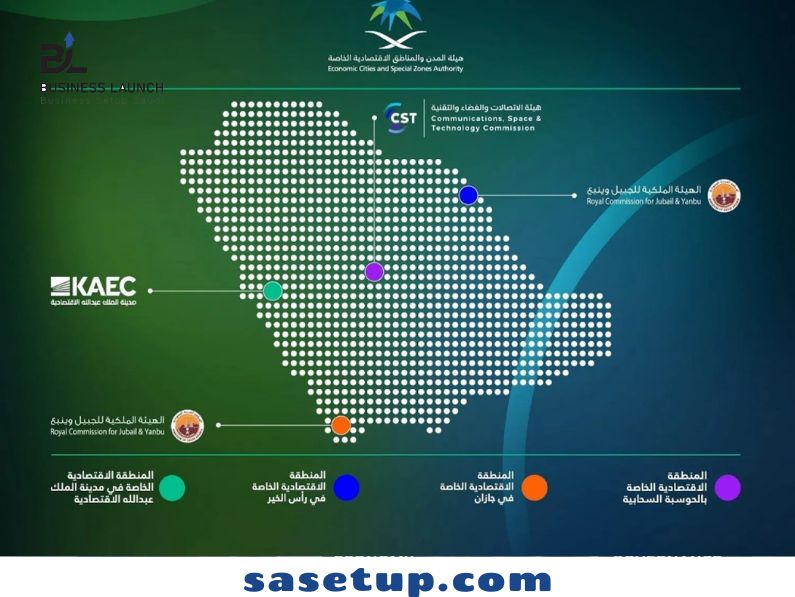
In 2026, Saudi Arabia offers a diversified portfolio of SEZs, each tailored to specific industries to foster innovation and supply chain resilience.
1. King Abdullah Economic City (KAEC) SEZ
Located on the Red Sea coast, KAEC is the premier hub for high-tech manufacturing and logistics.
-
Focus Sectors: Automotive supply chains, pharmaceuticals, MedTech, and consumer goods.
-
Strategic Edge: Access to King Abdullah Port, one of the world’s fastest-growing ports.
2. Ras Al-Khair SEZ
Situated in the Eastern Province, this zone is the heart of the Kingdom’s maritime and offshore industry.
-
Focus Sectors: Shipbuilding, rig platforms, and Maritime MRO (Maintenance, Repair, and Overhaul).
-
Strategic Edge: Proximity to Saudi Aramco’s maritime projects.
3. Jazan SEZ
Serving as the gateway to African markets and the southwestern region.
-
Focus Sectors: Food processing, metal conversion, and heavy logistics.
-
Strategic Edge: Abundant renewable energy resources (solar and wind) and mining proximity.
4. Cloud Computing SEZ (Riyadh)
A unique, non-geographical zone (though headquartered in Riyadh) that allows licensed companies to operate data centers across the Kingdom.
-
Focus Sectors: Data hosting, AI, cloud services, and digital infrastructure.
-
Strategic Edge: Data sovereignty and preferential tech-friendly regulations.
Major Benefits of Operating within Saudi SEZs
The primary draw for Special Economic Zones in Saudi Arabia is the aggressive incentive package finalized in early 2026. These benefits are codified to ensure long-term fiscal stability for investors.
1. Massive Tax Incentives
-
5% Corporate Income Tax: For up to 20 years (subject to renewal), a stark contrast to the standard 20% rate in the “Mainland.”
-
0% Withholding Tax: No tax on the repatriation of profits, dividends, or royalties paid to non-residents for licensed activities.
-
0% VAT: For goods traded within the SEZ or between SEZs.
2. Customs and Duty Exemptions
-
Suspension of Customs Duties: Goods imported into the zone for processing or manufacturing are exempt from customs duties until they enter the Saudi Mainland.
-
Capital Equipment Relief: No duties on the import of machinery and raw materials needed for production.
3. Regulatory and Labor Flexibility
-
Exemption from Commercial Laws: SEZ companies are largely exempt from the standard Saudi Companies Law and Trade Names Law, operating under a specialized ECZA regulatory framework.
-
Saudization Flexibility: While the Kingdom promotes local hiring, SEZs offer more flexible “Nitaqat” requirements and significantly reduced work permit fees for expatriate talent (often as low as 100 SAR).
Company Setup Process in Saudi SEZs: The 2026 Roadmap
Setting up a company within Special Economic Zones in Saudi Arabia has been streamlined through a unified digital gateway. The process is significantly faster than Mainland registration.
Step 1: Zone Selection and Activity Alignment
Investors must first identify which zone aligns with their “NACE” activity code. For instance, a shipbuilding company cannot be licensed in the Cloud Computing SEZ.
Step 2: Application via ECZA Portal
Unlike Mainland companies that start with MISA, SEZ entities apply directly through the Economic Cities and Special Zones Authority (ECZA).
-
Required Docs: Business plan, 3-year financial projections, and parent company constitutional documents.
Step 3: Licensing and Commercial Registration (CR)
Once ECZA approves the application, an SEZ-specific license is issued. This license serves as the foundation for obtaining your Commercial Registration (CR) from the Ministry of Commerce via an integrated process.
Step 4: Operational Readiness
-
Lease Agreement: Securing a physical or virtual footprint within the designated zone.
-
ZATCA Registration: Even with 0% VAT, you must register with the Zakat, Tax and Customs Authority (ZATCA) for compliance.
-
Labor Platform (Qiwa): Setting up your digital portal to issue work permits under the SEZ’s preferential labor laws.
See Also
- The Comprehensive Guide to Business Setup in Saudi Arabia: Navigating the Land of Opportunity (2026 Edition)
- Starting a Company in Saudi Arabia: The Ultimate 2026 Guide to Launching Your Business
- The Ultimate Guide to Commercial Registration Saudi Arabia: Unlocking Business Potential in Vision 2030
- The Comprehensive Guide to Company Formation Riyadh: Navigating the Heart of Saudi Arabia’s Economic Transformation
- The Definitive Guide to Establishing and Managing a Foreign Company Saudi Arabia
Requirements for Qualification
To maintain the integrity of the economic zones, the government has set specific “Economic Substance” requirements:
-
Core Income Generating Activities (CIGA): The primary value-adding activities must happen physically within the zone.
-
Minimum Investment Thresholds: While flexible, certain zones require a minimum capital injection to ensure serious industrial participation.
-
Governance Compliance: Annual audited financial statements must be submitted to ECZA and ZATCA to ensure the entity remains eligible for tax breaks.
Comparison: SEZ vs. Mainland Saudi Arabia
| Feature | Mainland KSA | Special Economic Zones (SEZs) |
| Corporate Tax | 20% | 5% (Up to 20 Years) |
| Withholding Tax | 5% – 20% | 0% |
| Customs Duties | Standard (approx. 5-15%) | Suspended/Exempt |
| Regulatory Body | MISA / Min. of Commerce | ECZA |
| Best For | Local retail, govt. contracting | Export, Tech, Manufacturing |
Frequently Asked Questions (FAQs)
1. Can a mainland Saudi company move to an SEZ?
Yes, but they must establish a new legal entity or a branch specifically for the SEZ and ensure that the SEZ activities are distinct from their mainland operations to prevent “tax leakage.”
2. Is 100% foreign ownership allowed?
Absolutely. One of the core tenets of Special Economic Zones in Saudi Arabia is allowing 100% foreign ownership without the need for a local partner.
3. How does the Cloud Computing SEZ differ?
The Cloud Computing SEZ is “location-agnostic.” While you register in Riyadh, you can build data centers in Dammam, Jeddah, or NEOM and still receive SEZ tax benefits, provided the management remains in the zone.
4. What is the minimum capital required?
The capital requirement is generally determined by the nature of the project. For industrial projects in Ras Al-Khair or KAEC, it usually starts at 500,000 SAR, though ECZA provides flexibility for high-growth tech startups.
5. Are there any restrictions on profit repatriation?
No. There are zero restrictions on moving capital or profits out of the country for SEZ-licensed companies.
External Resources for Investors
-
Invest Saudi (MISA): General investment insights and sector reports.
-
Economic Cities and Special Zones Authority (ECZA): The primary regulator for all Saudi SEZs.
-
Vision 2030 Official Site: To understand the broader strategic context of the Kingdom’s development.
Conclusion
The evolution of Special Economic Zones in Saudi Arabia represents a bold commitment to global trade. By 2026, these zones have become the preferred entry point for international capital, offering a “best-of-both-worlds” scenario: the stability of a G20 economy combined with the agility of a tax-haven-style regulatory environment. Whether your focus is maritime engineering in the East or cloud infrastructure in the capital, the SEZ framework provides the legal and fiscal certainty required for long-term success in the Middle East.
)